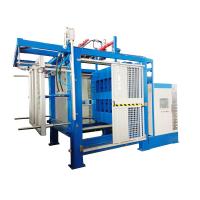
Steam Chamber: EPS shape molding machines typically consist of a
steam chamber. The pre-expanded EPS beads, which are soft and pliable, are fed
into the machine through the steam chamber.
Molding Chamber: Once inside the machine, the pre-expanded EPS
beads are transferred to the molding chamber. The molding chamber contains a mold or tooling that defines the
desired shape and size of the final EPS foam product. The expanded beads are placed into the mold cavity.
Closing and Pressing: After the beads are in the mold cavity, the
molding chamber is closed, and pressure is applied to compress the
beads. This compression allows the beads to fuse together, forming a solid
and uniform structure.
Cooling: After the pressing stage, the mold is cooled to solidify
the EPS foam. Cooling can be achieved through the circulation of chilled water or
other cooling methods. Proper cooling ensures that the molded foam retains its shape and
stability.
Mold Opening and Ejection: Once the EPS foam has cooled and
solidified, the mold is opened, and the finished product is ejected
from the machine. The mold may have ejector pins or other mechanisms to facilitate
the removal of the molded part.
Controls and Automation: EPS shape molding machines are equipped
with controls and automation systems to regulate various
parameters, such as temperature, pressure, and cycle time. These controls allow for precise and consistent molding results.